Most job seekers spend their time applying to listings they find online. The problem? 85% of jobs are never publicly advertised. The roles that fit your skills and experience most closely are often filled through recruiter networks before they ever reach a job board.
Knowing how to find a recruiter and how to get their attention opens up opportunities that never go public.
This guide covers where to find recruiters, which type suits your situation, how to approach them without getting ignored, and how to tell a good recruiter from one who will waste your time.
Why working with a recruiter changes your job search
A recruiter’s job is to match talent with open roles. When you find the right one, they become an active advocate for your career. They put your profile in front of hiring managers, tell you about roles before they go public, and negotiate salary on your behalf.
The phrase “the right one” matters here. Not every recruiter works the same way, and not every recruiter is the right match for your field or career level. Understanding the types available is a good first step in any job search guide.
The 4 types of recruiters (and which one you need)
Before you start searching, it helps to know who you are looking for.
Internal (in-house) recruiters work directly for a company and hire only for that organization. They are the right contact when you are targeting a specific employer, but they cannot help you explore the broader job market.
Agency or staffing recruiters work for a recruitment firm and fill roles across multiple client companies. They are paid by employers, not by candidates, so their services are free to job seekers. This is the most common type for professionals looking for help with active job searches across multiple organizations.
Retained (executive) headhunters are hired by companies on a retainer to fill senior or specialized roles. They typically approach candidates rather than wait to be approached, and are most relevant if you are at the director level or above, or in a very niche field.
AI talent platforms are a newer category worth knowing about. These platforms match candidates with roles and employers using AI, without relying on a traditional recruiter relationship. For many job seekers, platforms like Talentprise offer a way to get discovered by employers based on actual skills rather than keywords on a resume, without the uncertainty of cold outreach.
How to find a recruiter: 6 proven channels
The answer to: how to find a recruiter for a job, gets easier once you know which channel best fits your situation. Here are the most reliable options, depending on your industry, seniority, and goals.
1. Search LinkedIn
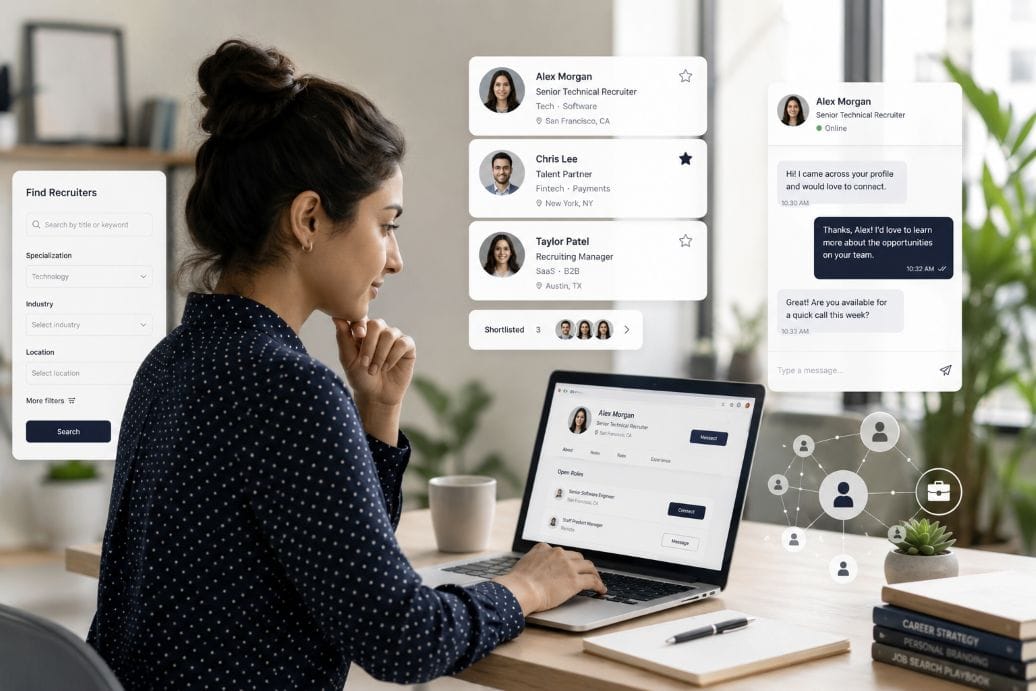
LinkedIn is where most recruiters spend their professional time, which makes it the most direct place to start. If you want to know how to find a recruiter on LinkedIn, the search function is your best tool.
Use the search bar and filter by “People.” Type terms like “[your industry] recruiter,” “talent acquisition specialist,” or “technical recruiter [your city].” Then filter by 1st or 2nd connections to prioritize people already in your network.
When you find relevant profiles, check their activity feed. Recruiters who post regularly about open roles or industry news are far more likely to respond than those who rarely engage on the platform.
The other side of how to find a recruiter on LinkedIn is making sure your own profile works in your favor. Include your current role, relevant skills, and a clear headline. A complete, skills-rich profile makes you more discoverable in recruiter searches.
2. Google for local and specialist firms
A targeted Google search can surface boutique recruitment agencies that specialize in your field. Searches like “finance recruiters in [city]” or “tech staffing agency [industry]” often return niche firms that work exclusively in your sector.
Browse the firm’s website before reaching out. Check whether they place candidates at your experience level and in your area. Many agencies list current open roles or recent placements, which tells you quickly whether they are the right fit.
3. Browse professional directories
Several professional directories list vetted recruitment agencies and individual recruiters by industry and region. The main ones worth checking:
- LinkedIn Recruiter Directory, searchable by specialization and location
- APSCo (for UK/international markets) is a membership body for professional staffing firms
- The Ladders, well-known for professional and executive-level roles
- Recruiter.com, a directory of independent recruiters and agencies by specialty
These directories are useful when you are relocating to a new city or switching industries, as they let you quickly filter by geography or sector.
4. Ask your professional network
Word of mouth is one of the most reliable ways to find a recruiter for a job. Ask former colleagues, managers, or professional contacts whether they have worked with a recruiter they would recommend.
A referral carries real weight. When a recruiter already knows the person introducing you, your first conversation builds on credibility rather than starting with cold outreach. This is especially true in tight-knit industries such as finance, legal, and healthcare, where relationships drive most placements.
5. Attend industry events and career fairs
Recruiters are regular attendees at industry conferences, professional meetups, and career fairs. In-person events give you the chance to introduce yourself naturally, without competing with crowded inboxes.
If you attend an industry event, look for attendees or sponsors affiliated with staffing firms. A short conversation at an event often leads to a follow-up that would never happen through cold outreach.
6. Use an AI talent platform
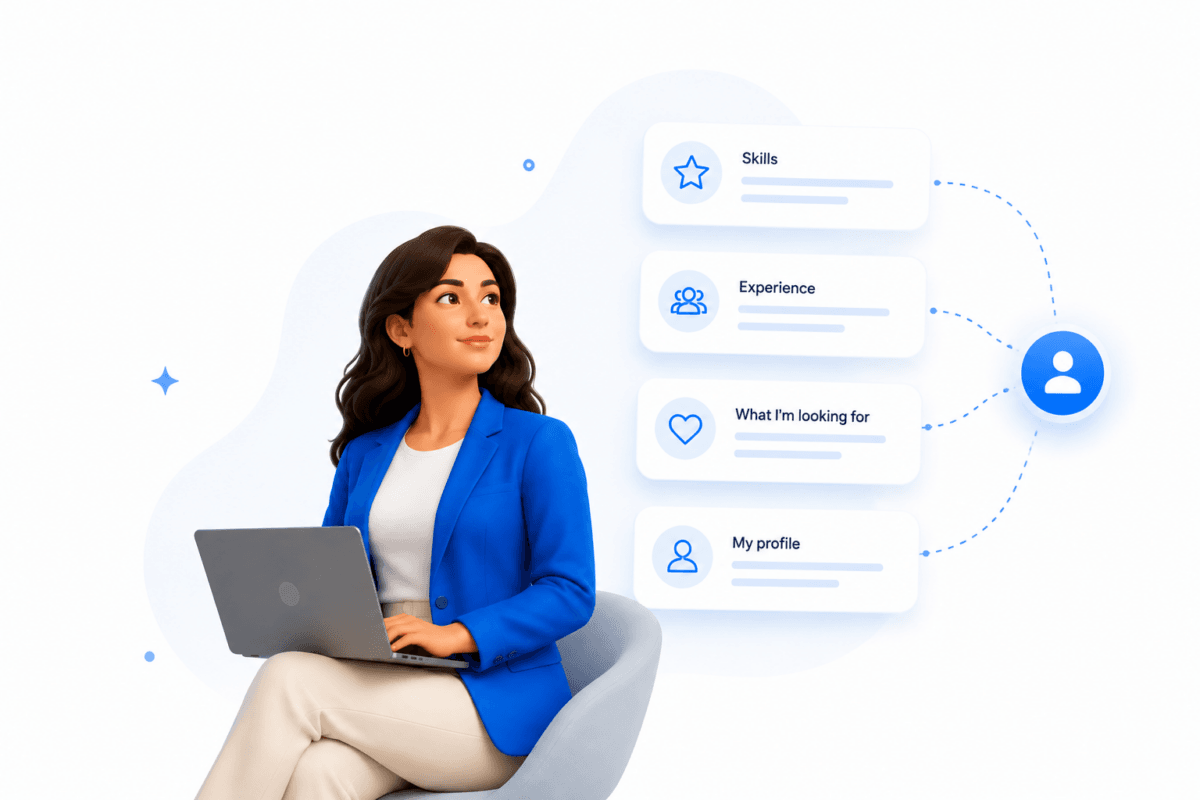
AI talent platforms work differently from the channels above. Instead of searching for individual recruiters yourself, you create a profile that describes your skills, experience, and goals, and the platform’s AI surfaces your candidacy to subscribed recruiters who are actively searching for someone like you.
Talentprise works this way. Once you complete your profile and skills assessment, recruiters running AI-powered searches can find you. You do not need to cold-approach anyone. Learn how AI job discovery works and how it compares to traditional job board applications.
For professionals open to new opportunities but not actively hunting, this model fits particularly well. It keeps you visible without requiring ongoing outreach effort.
How to find a recruiter for remote jobs
If you are specifically looking for remote work, the approach shifts. Most local staffing agencies fill on-site or hybrid roles, so the idea of how to find a recruiter for remote jobs is really about finding recruiters and platforms that operate across geographies, not just locally.
Your best options:
- Search LinkedIn for recruiters who mention “remote” in their bio or regularly post remote-first roles
- Focus on sector-specific agencies known for distributed teams, common in tech, digital marketing, and finance
- Use global AI talent platforms like Talentprise, which match candidates with employers across the US, Canada, Europe, and the Middle East, regardless of location
- Join remote-first professional communities (Slack groups, Discord servers, Reddit communities) where recruiters often post directly
Updating your LinkedIn profile to clearly state that you are open to remote opportunities also helps you show up in recruiter searches filtered by work arrangement.
How to approach a recruiter
Once you find a recruiter, how you reach out makes a real difference in whether they respond. Recruiters get dozens of messages every day. A vague or generic message usually goes unread.
An effective outreach message is short, specific, and makes it easy for the recruiter to say yes.
Sample outreach message:
Hi [Name], I came across your profile while looking for [industry] recruiters in [location/sector]. I have [X years] of experience in [specific area] and am currently exploring opportunities at [target company type or role level]. I thought your work with [agency/firm name] looked like a strong fit. Would you have 10 minutes to connect?
Keep it under 100 words. Lead with relevance, not your entire career history. Review things to put on a resume to make sure yours is recruiter-ready before you attach it, or offer to send one upon request.
Follow up once, politely, if you do not hear back within a week. Two unanswered messages are a clear enough signal to move on.
How to find a good recruiter and spot red flags
Not all recruiters are worth your time. How to find a good recruiter comes down to knowing what to look for and what to avoid.
Signs of a good recruiter:
- They take time to understand your experience, goals, and preferences before pitching roles
- They are transparent about the companies and roles they are presenting
- They give honest feedback on your profile or interview performance
- They respect your timeline and do not pressure you to accept offers quickly
- Their specialization aligns with your field
Red flags to watch for:
- They push you toward roles that clearly do not match your experience or goals
- They are vague about the employer’s name or role details before you commit to an interview
- They ask you to pay fees. Legitimate recruiters are paid by employers, never candidates
- They go silent after submitting your CV
- They contact you repeatedly for roles that are far below your target level
Your career growth strategies matter too much to leave in the hands of a recruiter who is not aligned with where you are headed. Take the time to assess fit before investing in the relationship.
How to work with a recruiter to find a job effectively
Finding a recruiter is only part of the equation. Knowing how to work with a recruiter to find a job makes the partnership more productive for both sides.
Once you establish contact with a recruiter who is a good fit, treat the relationship professionally. Show up on time for calls, respond promptly to messages, and be honest about your availability and any other processes you have running. Recruiters move faster when they can trust the candidates they represent.
Be specific about what you want. The more clearly you communicate your target role, salary expectations, preferred work arrangement, and non-negotiables, the better a recruiter can match you to relevant opportunities. Vague candidates are harder to place, and recruiters naturally prioritize those who are easiest to present to clients.
Make sure your resume and LinkedIn profile reflect your most current experience and that your in-demand skills are clearly visible before you start outreach. Recruiters often share your materials with employers quickly, sometimes before a formal conversation. If a recruiter moves you into an interview process, prepare a short list of questions to ask in an interview so you can assess the role, the hiring process, and the employer’s expectations clearly.
If a recruiter successfully places you, stay in touch. The same person who placed you today may be your best contact three years from now.
How to build your visibility as a passive candidate
Many professionals are not actively job hunting but would consider the right opportunity. Recruiters call these passive candidates, and they tend to be attractive to hire because they are already performing well somewhere.
If this describes you, the goal is not to find a recruiter through outreach. It is to make yourself discoverable by recruiters.
Keep your LinkedIn profile complete and current. Set it to “Open to Work” visible only to recruiters if you prefer. Contribute to industry discussions and publish content that shows your expertise. Consider creating a profile on an AI talent platform, where your skills are indexed and surfaced to employers actively searching for candidates like you.
Frequently asked questions
Conclusion
Knowing how to find a recruiter and how to work with one effectively gives you a real edge in a competitive job market. Whether you find them through LinkedIn, Google, a professional directory, or an AI talent platform, the most important step is to show up with a clear, current profile and a specific sense of what you are looking for.
If you want recruiters and employers to find you without constant outreach, create a free profile on Talentprise to enable AI job discovery. Complete your skills assessment, set your preferences, and let the AI match your experience to relevant opportunities. Over 10,000 recruiters and employers are actively searching on the platform, and your next role could already be looking for someone exactly like you.

Editorial Team
Our team is fueled by a passion for crafting valuable content that enriches the experiences of our users, customers, and visitors. We meticulously select meaningful and unbiased topics ranging from tips and guides to challenges and the latest in technology, trends, and job market insights. All curated with care and affection!