Knowing the right things to put on a resume separates candidates who make it to interviews from those who never hear back. That gap is wider than most job seekers realize. According to Jobscan’s 2025 ATS research, 97.8% of Fortune 500 companies now use an applicant tracking system to filter applications before a human ever reviews them. A resume missing the right sections, keywords, or structure can fail that filter regardless of how qualified the candidate is. If you have already applied and are waiting for a response, knowing how to follow up on a job application can help you check in professionally without sounding pushy.
This guide covers every section that should appear on a professional resume in 2026, the skills that employers and ATS systems prioritize, what to add when you have no work experience, and what to leave off entirely. If you are also working on your broader job search approach, the complete job search guide covers how your resume fits into a full strategy for getting found by employers.
The Essential Things to Put on a Resume
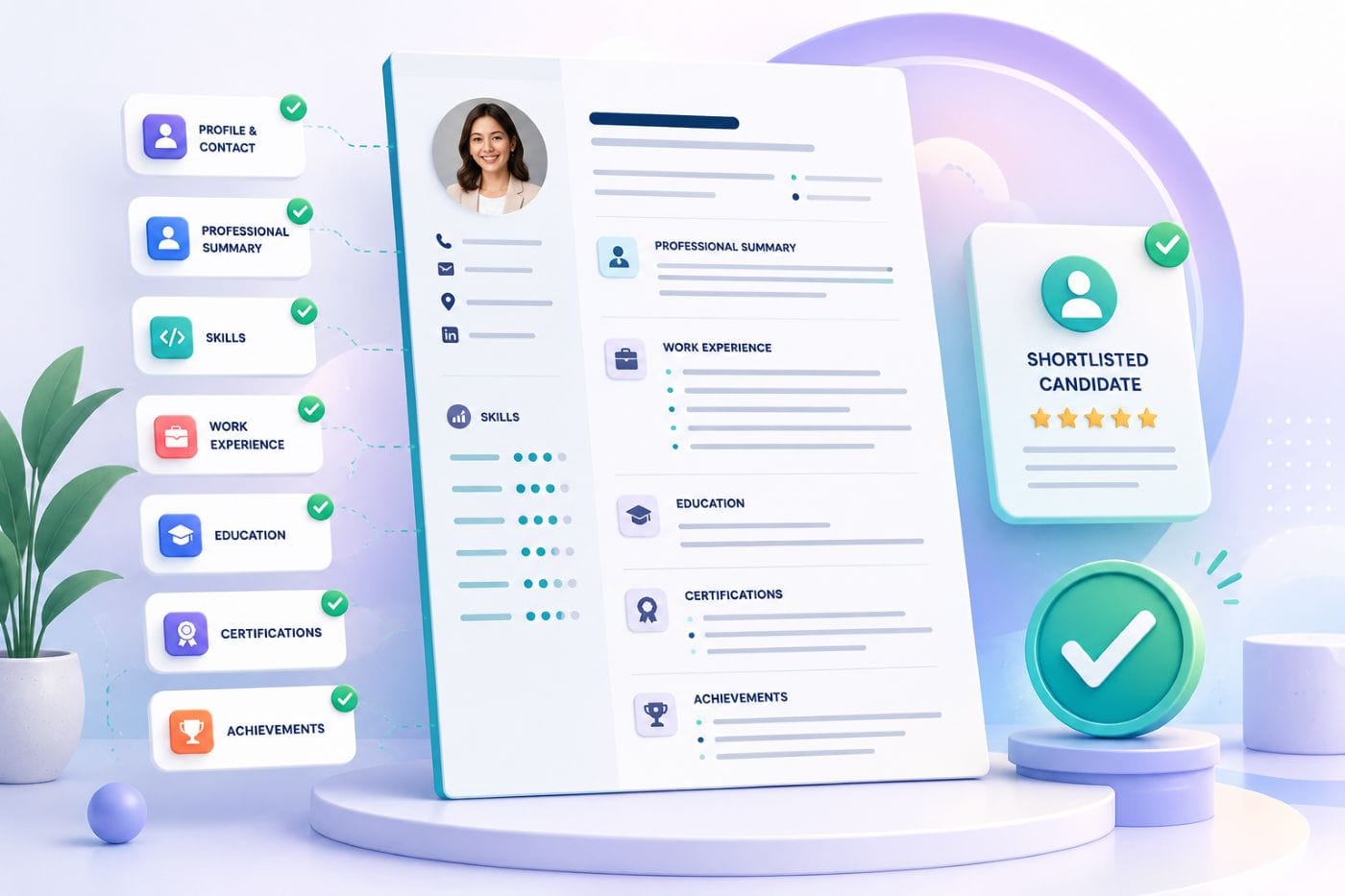
Every professional resume, regardless of industry, seniority, or role type, needs these five sections. They are the baseline that every recruiter and every ATS expects to find. Missing any one of them creates an immediate disadvantage.
1. Contact Information
Your contact section should be the first thing on your resume and the easiest information to find. Include your full name, a professional email address, your city and state (full street address is no longer standard or expected), your phone number, and your LinkedIn profile URL. If your work is portfolio-based (design, writing, software development, or marketing), include a link to your portfolio or personal site.
Keep the formatting simple. Your name should appear larger than the body text, but tables, columns, and graphic headers that look polished in a PDF often fail ATS parsing entirely, leaving your name and contact details unreadable in the system.
One item to remove: your full physical address. Listing a full address is outdated, signals your location in a way that may disadvantage you for roles with no location requirement, and is unnecessary given that employers communicate by email and phone.
2. Professional Summary
A professional summary is a two to four-sentence statement at the top of your resume that tells a recruiter who you are, what you specialize in, and what kind of role you are pursuing. It is not an objective statement (which describes what you want from the job) but a value statement (which describes what you bring to it).
A strong professional summary includes your role title, your primary area of expertise, your most significant quantified achievement, and the type of opportunity you are targeting. For example: “Senior financial analyst with eight years of experience in corporate treasury and FP&A. Reduced month-end close cycle by 30% through process automation at a $400M manufacturing firm. Seeking a senior finance leadership role at a high-growth company.”
Because the professional summary appears near the top of the resume, it is one of the best places to include your primary role title, core skills, and most relevant keywords.
3. Work Experience
Work experience is the core of most resumes and the section recruiters spend the most time reading. Each role should include the company name, your job title, the dates of employment (month and year), and a list of achievement-focused bullet points rather than responsibilities.
The distinction between achievements and responsibilities matters significantly. A bullet point for responsibilities states what the job requires. An achievement bullet says what you delivered. “Managed a team of five analysts” is a responsibility. “Led a team of five analysts to deliver a market sizing project two weeks ahead of schedule, contributing directly to a $2.3M contract renewal” is an achievement.
Every bullet point should follow this structure: an action verb, a specific task or project, and a measurable result. Numbers are not always available, but should be used whenever they genuinely reflect the scope of your work. Revenue generated, costs reduced, time saved, team size managed, clients served, error rate reduced: any of these gives the recruiter a concrete sense of your contribution rather than a vague sense of your activities.
Include your three to five most significant achievement bullets for each role. Older roles from more than ten years ago can be summarized in fewer bullets. Roles unrelated to your current career direction can be listed without bullets if you need to account for the time gap.
4. Education
Your education section should include the institution name, degree earned, field of study, and graduation year. For recent graduates, include GPA if it is above 3.5, academic honors, relevant coursework, and any significant extracurricular achievements. For professionals more than five years out of school, the education section moves toward the bottom of the resume and contains only the basic facts.
Relevant certifications, professional licenses, and specialized training programs generally belong in a separate certifications section rather than under education, since they carry different weights depending on the industry. A CPA designation or a PMP certification is not an educational credential; it is a professional qualification that many employers specifically filter for.
5. Skills
A dedicated skills section is the fifth non-negotiable section on every professional resume. It is also the section with the highest impact on ATS filtering, since recruiters and automated systems search specifically for the hard skills required by the role. A skills section placed immediately after your professional summary or work experience section gives both ATS systems and human reviewers an immediate read on your core competencies before they reach the details of your experience.
For additional guidance on resume formats, examples, and section-by-section writing tips, CareerOneStop’s Resume Guide offers a useful step-by-step reference for job seekers.
The full breakdown of what to include, how to structure it by industry, and how to format it for ATS compliance is covered in the section below.
Things to Put on a Resume for Skills
The things to put on a resume skills section matter more than most candidates realize, and are where most resumes are weakest. According to the LinkedIn 2025 Workplace Learning Report, skills are now the primary lens through which organizations evaluate talent, with upskilling cited as the second-highest L&D priority globally. That same shift has reached hiring: ATS systems and recruiter searches increasingly filter by specific skills before reviewing any other section of the resume.
A weak skills section, a generic list of “Microsoft Office, communication, teamwork,” is one of the most common reasons a qualified candidate fails ATS screening. A strong skills section, specific, role-relevant, and formatted correctly, is one of the most reliable ways to pass it.
Hard skills vs soft skills
Hard skills are specific, teachable, and measurable capabilities, such as programming languages, accounting software, data analysis tools, project management methodologies, foreign languages, and technical certifications. These are the skills that ATS systems and Boolean recruiter searches specifically target. They should always be listed explicitly by name rather than implied.
Soft skills are behavioral and interpersonal qualities such as communication, leadership, adaptability, problem-solving, and collaboration. Soft skills are important, but listing them generically in a skills section adds no value. Every candidate claims to be a strong communicator. Instead of listing soft skills, demonstrate them through specific achievement bullets in your work experience section. “Led cross-functional team of twelve through a $1.8M product launch” demonstrates leadership more powerfully than the word “leadership” in a bullet list.
Skills for resume by industry category
The specific hard skills that matter most vary significantly by industry and role. Here are the highest-priority skills to include by category:
Technology and engineering roles: Programming languages (Python, Java, JavaScript, SQL, C++), cloud platforms (AWS, Azure, Google Cloud), development frameworks (React, Node.js, Django), DevOps tools (Docker, Kubernetes, CI/CD pipelines), version control (Git), cybersecurity certifications (CISSP, CompTIA Security+).
Finance and accounting roles: Financial modeling, Excel (advanced: pivot tables, VLOOKUP, macros), ERP systems (SAP, Oracle, NetSuite), accounting software (QuickBooks, Sage), CPA or CFA designation, data visualization (Tableau, Power BI), SQL for financial data.
Marketing and creative roles: SEO and SEM; Google Analytics and Google Ads; social media platforms (specify which); email marketing platforms (HubSpot, Mailchimp, Klaviyo); Adobe Creative Suite; CMS platforms (WordPress, Webflow); content management; and copywriting.
Healthcare roles: Specific certifications (RN, CRNA, NP, PA-C), electronic health record systems (Epic, Cerner), clinical procedures and specialties, medical coding (ICD-10, CPT), HIPAA compliance, and patient care specific to the setting.
Operations and supply chain roles: ERP and supply chain software (SAP, Oracle SCM, NetSuite), inventory management, procurement and vendor management, Lean and Six Sigma certifications, logistics and transport management systems, data analysis tools.
For a current view of which skills are in highest demand across industries and how to prioritize building them, see the in-demand skills guide.
How to choose which skills to list
The most effective approach to the skills section is to treat each job application as a unique target. Read the job description carefully and note every skill mentioned. Include every skill from that description that you genuinely possess, using the exact phrasing the employer used rather than synonyms. An ATS searching for “data visualization” may not match “data presentation,” even if they mean the same thing.
Keep the skills section to fifteen to twenty skills maximum. A skills section with forty generic entries reads as padding and may actually reduce your score in ATS systems that weight relevance. Prioritize the skills most central to the specific role, then add supporting skills that round out your profile.
How to format the skills section for ATS
A simple two or three-column list of skills in a standard font parses correctly in virtually every ATS. Skills listed in tables, text boxes, or columns built with tab stops often fail parsing and may not be readable by the system. Place the skills section immediately after your professional summary or after your work experience section, depending on whether skills-based or experience-based hiring is more common in your target industry.
Never put your most important skills exclusively in the header, footer, or sidebar of the resume. Many ATS systems do not parse those areas. Every skill you want counted must appear in the main body of the document.
Important Things to Put on a Resume Beyond the Basics
Once the five core sections are in place, additional resume sections can significantly strengthen your application for specific roles or industries. These are not padding; they are sections that directly address gaps or demonstrate qualifications the core sections cannot fully convey.
Certifications and licenses
Professional certifications deserve their own section rather than being buried in the education section. Place them immediately after your skills section. Include the certification name, the issuing body, and the year earned or expiry date where relevant.
High-value certifications that recruiters actively filter for include: PMP (project management), CPA or CFA (finance), AWS Certified Solutions Architect (cloud), CISSP or CompTIA Security+ (cybersecurity), Google Analytics Certification (marketing), Salesforce Administrator (CRM), Scrum Master (agile), Six Sigma Green or Black Belt (operations), and any licensed professional credential relevant to regulated industries such as healthcare, law, or engineering.
If you are actively working toward a certification, list it as “In progress, expected [month/year].” This demonstrates initiative without misrepresenting your qualifications.
Projects and portfolio
A project section bridges the gap between claimed skills and demonstrated output. For software developers, data scientists, and other technical roles, listing two or three significant personal or professional projects, each with a brief description and a link to the code repository or live product, is more persuasive than any number of skills bullets.
For marketing and creative professionals, a portfolio link in the contact section and a brief projects section covering notable campaigns, published pieces, or client work demonstrates skills in a way no skills list can replicate. For consultants and analysts, highlighting a key project with scope, methodology, and outcome can differentiate a resume in a competitive field.
Volunteer work and extracurriculars
Volunteer work is particularly valuable in two contexts: when you are early in your career and need to fill out a thin work experience section, and when you hold a significant leadership role in a volunteer organization that demonstrates skills relevant to the target role. A Director of Marketing for a nonprofit runs real marketing campaigns; that experience is legitimate and should be presented as such.
Languages
Language skills are genuinely valuable for most professional roles and are an explicit requirement for many of them. List languages you speak with an honest proficiency level: native/bilingual, professional working proficiency, or conversational. Overstating proficiency creates problems at the interview; understating it loses you an advantage.
Awards and professional memberships
Industry awards, recognition, and membership in professional associations signal credibility and active participation in your field. Include these briefly near the end of the resume. Membership in relevant professional associations (SHRM for HR professionals, CFA Institute for finance, IEEE for engineers) is worth listing, even if it seems minor, because it signals professional seriousness and sometimes provides recruiters with additional search terms.
Things to Put on a Resume With No Work Experience
Things to put on a resume with no work experience is one of the most common challenges for students, recent graduates, and career changers. The good news is that a resume with no formal work history can still be compelling if it demonstrates capability through other forms of evidence.
Lead with education. Move the education section to the top of the resume and expand it: include relevant coursework, academic projects, GPA if above 3.5, academic honors, and any thesis or capstone work. A senior thesis on supply chain optimization is relevant for a logistics role; a class project building a web application is relevant for a software role.
Add a projects section. Personal projects, freelance work, open-source contributions, and class projects all count. A GitHub profile with active repositories, a published article, or a small client project done as a favor are all legitimate evidence of capability. Describe each project with scope, tools used, and outcome.
Include internships, part-time work, and volunteering. Any paid or unpaid work experience should be included, even if it is not directly related to the target role. Retail, food service, and administrative work demonstrate reliability, customer service, and professional conduct. Leadership roles in student organizations demonstrate the same skills as leadership roles in professional settings.
Certifications fill skills gaps. If you lack professional experience in a specific area, completing a relevant certification demonstrates self-directed learning. Google’s digital marketing certifications, AWS Cloud Practitioner, Coursera’s data science specializations, and LinkedIn Learning certificates are all legitimate additions to an entry-level resume.
Target the skills section carefully. With limited work experience, your skills section carries more weight than usual. List every genuinely held technical skill explicitly and match it as closely as possible to the language used in your target job postings.
Best Things to Put on a Resume to Stand Out
The best things to put on a resume are not the most impressive-sounding items. They are the specific, verified, role-relevant details that give a recruiter or ATS a reason to move your application forward. These four practices consistently differentiate resumes in competitive pools.
Quantified achievements over vague responsibilities. Numbers are the single most effective upgrade available to any resume. Before submitting, review every bullet in your work experience section and ask whether it can be quantified. Revenue generated, costs reduced, response time improved, team size managed, clients onboarded, projects delivered on time and on budget. Even approximate numbers (“increased email open rates by approximately 25% over three months”) are more persuasive than generic descriptions.
Exact keywords from the job description. Many ATS platforms and recruiter searches still rely heavily on exact keywords, so mirroring the job description language can improve your chances of being found. If the job description says “cross-functional collaboration”, use that phrase rather than “worked with other teams”.
A tailored professional summary for every application. A generic summary wastes the most-read section of the resume. A tailored summary that references the specific role, company type, and required qualifications immediately signals to the recruiter that this application was written for this role.
Clean, consistent formatting. Inconsistent fonts, misaligned dates, varying bullet styles, and mixed capitalization communicate carelessness. A clean, consistent format does not make your resume stand out on its own, but inconsistency reliably creates a negative impression. Every element should be consistent: date format (November 2022 or 11/2022, not both), bullet style, font sizes, and spacing.
Things Not to Put on a Resume
Knowing what to leave off is as important as knowing what to include. These are the items that consistently hurt rather than help. Here are the things not to put on a resume:
A photograph. In the United States, including a photo on a resume is not standard practice and can create legal risk for employers concerned about claims of unconscious bias. Unless you are applying for a role where appearance is a professional requirement (e.g., acting or modeling), leave the photo off entirely.
Your full home address. City and state are sufficient. Your street address is unnecessary and signals outdated resume practices. For remote roles, it can also prompt employers to make assumptions about your location before they have spoken to you.
“References available upon request.” This phrase has not been standard for at least a decade. Every employer knows that references are available upon request. The phrase uses space without adding any information.
An objective statement. Objective statements describe what you want from the job. A professional summary describes what you bring to it. Recruiters reading hundreds of resumes have no interest in your career aspirations until they have decided you are qualified. Replace any objective statement with a professional summary.
Irrelevant work experience from more than fifteen years ago. Roles from more than fifteen years ago, particularly those unrelated to your current career direction, add length without adding value. If you need to account for the time gap, list the role with dates but no bullet points.
Personal information. Marital status, age, nationality, religion, and political affiliation have no place on a professional resume in the US. Including them does not help your application and may inadvertently invite biases you cannot predict.
Exaggerated or false credentials. Background checks now routinely verify employment dates, job titles, education, and certifications. Misrepresenting any of these is a termination offense if discovered after hire, and is frequently discovered. Represent your experience accurately and let your genuine qualifications make the case.
Dense walls of text. Long paragraphs in the work experience section are almost never read fully by human reviewers. Keep bullets concise, specific, and scannable. If a bullet runs to three lines, it needs to be edited, not formatted differently.
Your Resume Is the Start, Not the Whole Strategy
A strong resume gets you past the ATS and into the recruiter’s shortlist. A strong resume gets you past the ATS and into the recruiter’s shortlist. A resume helps when you apply, but many opportunities are never advertised publicly; our guide to the hidden job market explains how to become discoverable before a job post exists. Many experienced professionals are discovered before they actively apply, through talent platforms, referrals, and direct recruiter outreach. According to LinkedIn, 60% of the workforce is not actively applying anywhere. They are passive candidates who can only be reached through direct sourcing.
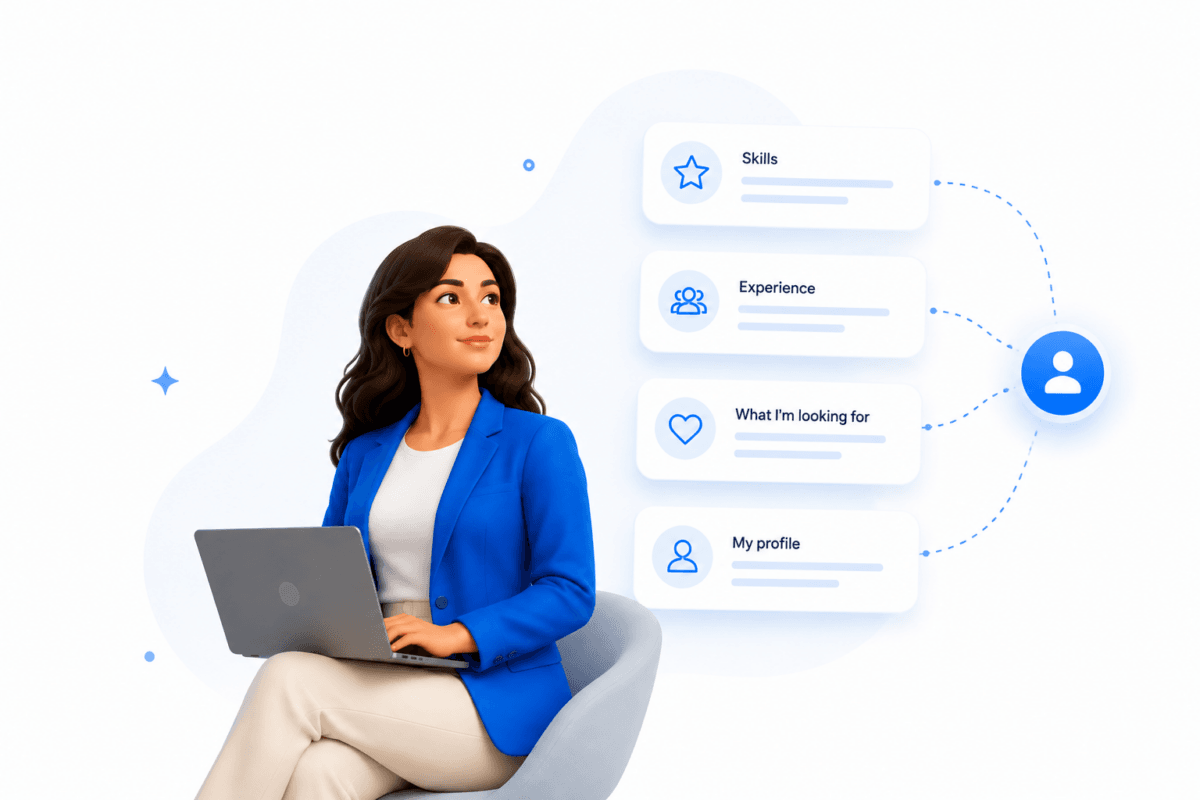
For a job search that works even when you are not actively applying, a complete profile on an AI matching platform runs in parallel with your resume strategy. Talentprise’s AI job discovery platform evaluates your skills and experience semantically, not by keyword overlap, and surfaces your profile to employers searching for exactly your capabilities, globally. This means your skills are discoverable to recruiters who would never see your resume on a job board.
For preparation guidance on the next stage after your resume gets you an interview, see the interview preparation guide.
Create your free Talentprise profile today and get discovered by employers searching for your skills, without applying to a single job posting.
FAQ

Editorial Team
Our team is fueled by a passion for crafting valuable content that enriches the experiences of our users, customers, and visitors. We meticulously select meaningful and unbiased topics ranging from tips and guides to challenges and the latest in technology, trends, and job market insights. All curated with care and affection!