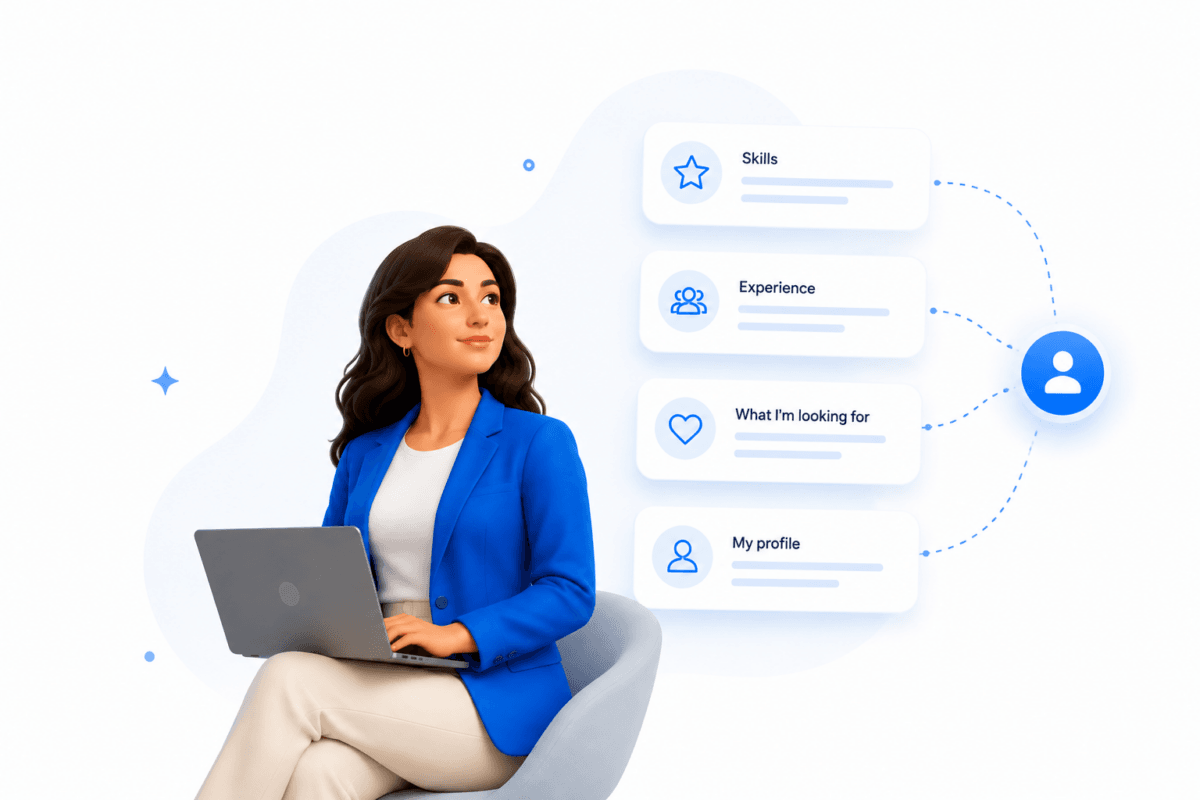

Most jobs are never advertised. Roles get filled through referrals, recruiter searches, and direct outreach before a job post is written, or instead of one ever being written. If you spend your time applying to listed positions, you’re competing for a fraction of what’s actually available.
This is the hidden job market. It isn’t a secret network or an insider club. It’s simply how most professional hiring works, especially for senior and specialist roles.
Here’s what it is, why employers rely on it, and how to position yourself to be found without sending another application into the void. If you have already applied and are waiting in silence, our guide on how to follow up on a job application explains when to check in and what to say. If you are still building the broader foundation of your search, start with our complete job search strategy guide before narrowing in on hidden opportunities.
What Is the Hidden Job Market?
The hidden job market refers to positions filled without public advertising. These roles go to internal candidates, employee referrals, headhunted professionals, and people already in recruiter databases, all before a job board listing is ever created, if one is created at all.
Estimates vary, but labor market research consistently suggests that a large share of professional roles, some put it at 70 to 80 percent, are never publicly posted. The range is wide because it varies by industry, seniority, and company size. For senior leadership, specialist technical roles, and confidential replacement hires, the proportion of unadvertised roles is higher. For entry-level and high-volume hiring, employers are more likely to post publicly.
The point isn’t the exact figure. The point is that the jobs you see listed are not the full picture.
Why Employers Use the Hidden Job Market
Employers fill roles quietly for practical reasons, not to exclude anyone.
Speed is usually the first one. Sourcing a referred candidate or someone already in a recruiter’s network skips weeks of job board advertising, screening, and interview scheduling. Cost is the second. Job board fees, sponsored listings, and the recruiter hours spent reviewing hundreds of applications add up quickly. A referral or a direct search sidesteps most of that.
Risk reduction matters too, especially for senior roles. A candidate who is recommended by a trusted employee or identified by a specialized recruiter arrives with a degree of lower risk, as the employer already has some context before the first conversation.
Then there’s confidentiality. Replacing a senior leader quietly, restructuring a team without tipping off the market, exploring a hire in a new region; none of those conversations happen on a public job board.
This isn’t a conspiracy. It’s just how organizations move efficiently when they can.
Who Benefits Most from the Hidden Job Market
Not every job seeker is equally affected by unadvertised jobs. But certain groups stand to gain the most from knowing how to find hidden jobs.
Experienced professionals in specialist or leadership roles are more likely to be sourced than to apply for roles. At the director level and above, many hires never touch a job board.
Career changers often struggle with traditional application systems because their resumes may not match a job description word-for-word. Research from Harvard Business School and Accenture found that automated hiring systems can exclude qualified candidates whose backgrounds do not fit standard hiring filters. For career changers, the hidden job market matters because recruiter outreach, referrals, and searchable talent profiles can create opportunities that do not depend entirely on keyword-matched applications.
For candidates who still need to improve their resume content, the guide to things to put on a resume explains which sections matter most for both ATS systems and human reviewers.
Passive candidates, you don’t need to be job hunting to be found by recruiters. LinkedIn Talent Solutions reports that active job seekers at 36% of the workforce. The remaining are employed, not searching for jobs, but can be reached and are largely invisible to inbound hiring pipelines. That’s exactly who companies go looking for through direct sourcing.
The Standard Advice and Where It Falls Short
You’ve probably heard the standard hidden job market tips: network more, post on LinkedIn, ask for informational interviews, and reach out directly to companies you want to work for.
That advice isn’t wrong. Networking does work. Referrals do get people hired. But it relies on who you already know and the effort you can sustain while holding down a job.
What it misses is being findable to recruiters who don’t know you yet. If you want to take a more direct approach, learning how to find a recruiter can help you identify the right specialist, agency, or internal talent contact for your field.
Networking covers your existing circle. It doesn’t cover the recruiter in Chicago who’s currently running a database search for someone with your exact background, at your level, in your field. If you’re not in any talent pool they have access to, that search ends without finding you.
How to Actually Access the Hidden Job Market in 2026
Knowing the hidden job market exists is one thing. Knowing how to find hidden jobs that match your background is another. These 5 approaches work for employed professionals who don’t have time to run an active search.
1. Make yourself searchable, not just visible
Being visible and being searchable are not the same thing. Visibility is having a LinkedIn profile. Searchability is the ability to appear when a recruiter types your skills, industry, and experience level into a sourcing tool. Searchability starts with the language employers actually use, which is why understanding the in-demand skills employers are hiring for matters before you update your profile. If LinkedIn is your starting point, these LinkedIn profile examples for job seekers can help you turn your headline, About section, and skills into clearer recruiter search signals.
Most professionals optimize for the LinkedIn algorithm: posts, connections, engagement. Recruiters using dedicated sourcing platforms don’t care about your post engagement. They run queries. A query might look like: “Senior financial analyst, private equity background, three to seven years experience, open to relocation.” If your profile doesn’t clearly communicate those signals, the right recruiter won’t find you.
2. Join talent pools that recruiters actively search
Some platforms give recruiters access to a pool of verified professionals. When a recruiter runs a search for a specific skill set, experience level, and industry background, matching profiles surface automatically. The job seeker doesn’t apply. The recruiter comes to them.
Talentprise works this way. Over 10,000 recruiters search the talent pool each month using plain language queries. The AI interprets role requirements in context, not by keyword, so professionals with non-standard titles or career paths still surface for relevant searches. Registration is free, and profiles are visible only to verified, subscribed recruiters and are not publicly searchable.
Once your profile is live, you don’t need to do anything else. Recruiters searching this week, next month, or six months from now can find you.
3. Signal availability without broadcasting desperation
Most professionals want recruiters to know they’re open without advertising it to their current employer or the wider professional network. That’s a real tension.
LinkedIn’s Open to Work feature addresses it partially. You can restrict visibility to recruiters only. On sourcing platforms like Talentprise, you control visibility settings directly. Your profile is shown only to verified, subscribed recruiters. Your profile is not publicly searchable in search engines.
4. Build a profile that describes what you’ve done, not just where you worked
Job titles are poor signals. “Account Manager” at a 10-person startup and “Account Manager” at a Fortune 500 company describe completely different roles. ATS systems and basic keyword searches treat them the same.
A strong profile for the hidden job market communicates context: the scale of what you managed, the industries you worked in, and the specific functions you led. AI-powered sourcing tools read that context and match you to recruiters who need exactly what you offer, even when the terminology doesn’t match perfectly.
5. Keep it current
Recruiter searches favor recent signals. A profile last updated 3 years ago won’t surface as strongly as one refreshed this quarter. You don’t need to change jobs to update your profile. Update your skills, add recent projects, and adjust your availability status. If you are thinking beyond your next role, our guide to career growth strategies can help you build the experience, visibility, and positioning that make better opportunities easier to attract.
What Happens When a Recruiter Finds You
Understanding what comes next matters because it’s different from what you’re used to.
A recruiter runs a sourcing query. Your profile surfaces in the results. They read your background. If you match what they need, they contact you directly, through the platform, by email, or sometimes by phone. You’re not one of 250 applicants they’ll get to eventually. You’re a specific person they chose to reach out to because you fit.
You decide what happens next. Respond, ask for more information, or decline. There’s no obligation. You didn’t initiate the process, and you’re not committed to it.
For professionals who are employed and quietly open to opportunities, this tends to feel very different from the standard job search. The recruiter did the work. You just decide if it’s worth your time.
Frequently Asked Questions
You’re Already Qualified. Make Sure Recruiters Can Find You.
The hidden job market isn’t closed. It’s just not on job boards. The roles you’d actually want are often filled through searches you’d never know about unless someone was already looking at your profile.
Create a free Talentprise profile and join the talent pool to unlock AI job discovery. Recruiters searching for your skills and background can find you directly, no application required, no competing with hundreds of candidates for the same listing.

Editorial Team
Our team is fueled by a passion for crafting valuable content that enriches the experiences of our users, customers, and visitors. We meticulously select meaningful and unbiased topics ranging from tips and guides to challenges and the latest in technology, trends, and job market insights. All curated with care and affection!