Most engineers apply for jobs the same way. Search a board, submit a resume, wait. Some get callbacks. Many don’t. What many engineers don’t realize is that a significant share of engineering roles never appear on job boards at all. They get filled through engineering recruiters who already have candidates in mind before a job is ever posted.
Here’s how that system works and what you can do to be one of those candidates.
What engineering recruiters actually do
An engineering recruiter is a specialist who matches engineers with job opportunities on behalf of employer clients. Most work within a staffing agency or as independent search consultants. Their fee comes from the hiring company, so the service costs the engineer nothing.
The process on your end is fairly straightforward. A recruiter identifies you through your profile, network, or a referral. They screen you to understand your background, your seniority, and what you’re actually looking for. If there’s a relevant client match, they introduce you. The recruiter’s income depends on placing the right person, which means they have a direct interest in not wasting your time.
Engineering recruiters generally handle three types of placements: contract (short-term project work), contract-to-hire (a trial period that may convert to a permanent role), and direct placement (permanent from day one). Which one you’re being pitched tells you a lot about the employer’s urgency and commitment level.
Why most engineering jobs never get posted
Many engineering roles don’t get posted. CareerOneStop, run by the U.S. Department of Labor, notes that many openings are never publicly listed, and the UK National Careers Service says that hidden roles can account for a large share of vacancies in some industries. For engineering roles, the point is clear: senior roles, confidential backfills, urgent project hires, and specialist positions tend to move through recruiters or referrals. A job board posting is often the last step, not the first.
Senior roles, confidential replacements, and time-sensitive hires are especially likely to go this route. A manufacturer needing a controls engineer on a six-week timeline is not posting on Indeed and waiting. They call a recruiter who already has three candidates ready.
The demand driving that urgency is real. The Bureau of Labor Statistics projects around 186,000 across architecture and engineering occupations from 2024 to 2034, with industrial engineers growing by 11% and mechanical engineers by 9.1%. That’s not a slow market. It’s one where qualified candidates get placed before most people know a role is open.
For engineers, this matters because applying only to advertised vacancies means competing for a fraction of what’s actually available. The engineers being considered for those unadvertised roles are already in a recruiter’s database or network.
What engineering recruiters look for in a candidate
Recruiters are matching your profile to specific client requirements, not evaluating you on potential alone. The clearer and more specific your background looks, the faster a recruiter can identify you as a fit.
Discipline and specialism matter most. Engineering recruiters tend to operate in specific verticals: civil and structural, mechanical and manufacturing, electrical and controls, software and systems, energy, and so on. The more precisely your discipline comes through in your profile, the more relevant you are to the recruiters who work in that space.
Certifications and licensing follow closely. PE licensure, software proficiencies such as AutoCAD, SolidWorks, MATLAB, or Python, industry certifications such as PMP or Six Sigma, and security clearances are directly sought by recruiters. These are the terms that trigger a match in their databases. Understanding which skills are genuinely in demand right now helps you lead with the right ones.
Location and availability need to be clear. Recruiters need to know whether you’re open to relocation, available for contract work, or limited to remote or hybrid arrangements. Candidates who are vague on these points are harder to place quickly, so they get passed over.
Career trajectory rounds it out. A clear progression from junior to senior to lead tells a recruiter what level of role to pitch you for. Gaps or inconsistencies without context can slow down a placement, so if there’s something unusual in your history, address it briefly upfront.
Search terms vary a lot by discipline, sometimes more than you’d expect. A civil engineer and a controls engineer could work at the same plant and still show up in completely different recruiter searches.
Engineering field | What recruiters search for | What candidates should highlight |
|---|---|---|
Civil / structural | PE, EIT, infrastructure, bridges, drainage, DOT, AutoCAD Civil 3D | Project type, project value, applicable codes, public vs private sector |
Mechanical engineering | SolidWorks, CATIA, FEA, GD&T, NVH, CNC, tolerancing, product design | Tools, materials, industry sector (automotive, aerospace, medical devices), design to production experience |
Electrical / controls | PLC, SCADA, Allen-Bradley, Siemens, HMI, ladder logic, automation | Control systems, power supply and distribution, plant types, programming environments, commissioning experience |
Software engineering | Python, Java, cloud, DevOps, distributed systems, microservices, Kubernetes | Tech stack, codebase scale, team size, product type, architecture ownership |
Chemical engineering | Aspen Plus, HYSYS, P&ID, HAZOP, PSM, process simulation, API standards | Plant type (refinery, pharma, petrochemical), project phase, safety systems experience |
Mechatronics | Embedded systems, MATLAB/Simulink, ROS, CAN bus, firmware, PCB design, robotics | Hardware/software integration depth, prototyping to production, industries (automotive, medical devices) |
Industrial engineering | Lean, Six Sigma, Arena, simulation, supply chain, facilities layout, workforce planning | Throughput improvements, cost reductions, system redesigns, industries served |
Manufacturing / operations | ERP (SAP, Oracle), production ramp-up, supplier management, quality systems | Line efficiency, cost savings, production scale, ops metrics |
How to get on engineering recruiters’ radar
Waiting to be found only works if there’s something out there to find.
Start with LinkedIn. Most engineering recruiters, especially those doing digital sourcing, begin their candidate searches there. Your headline, skills section, and experience entries should reflect what you actually do and the specific tools and environments you work in. “Mechanical engineer with 8 years in automotive powertrain development, experienced in NVH testing and FEA simulation” is genuinely useful to a recruiter. “Experienced engineer seeking new opportunities” is not.
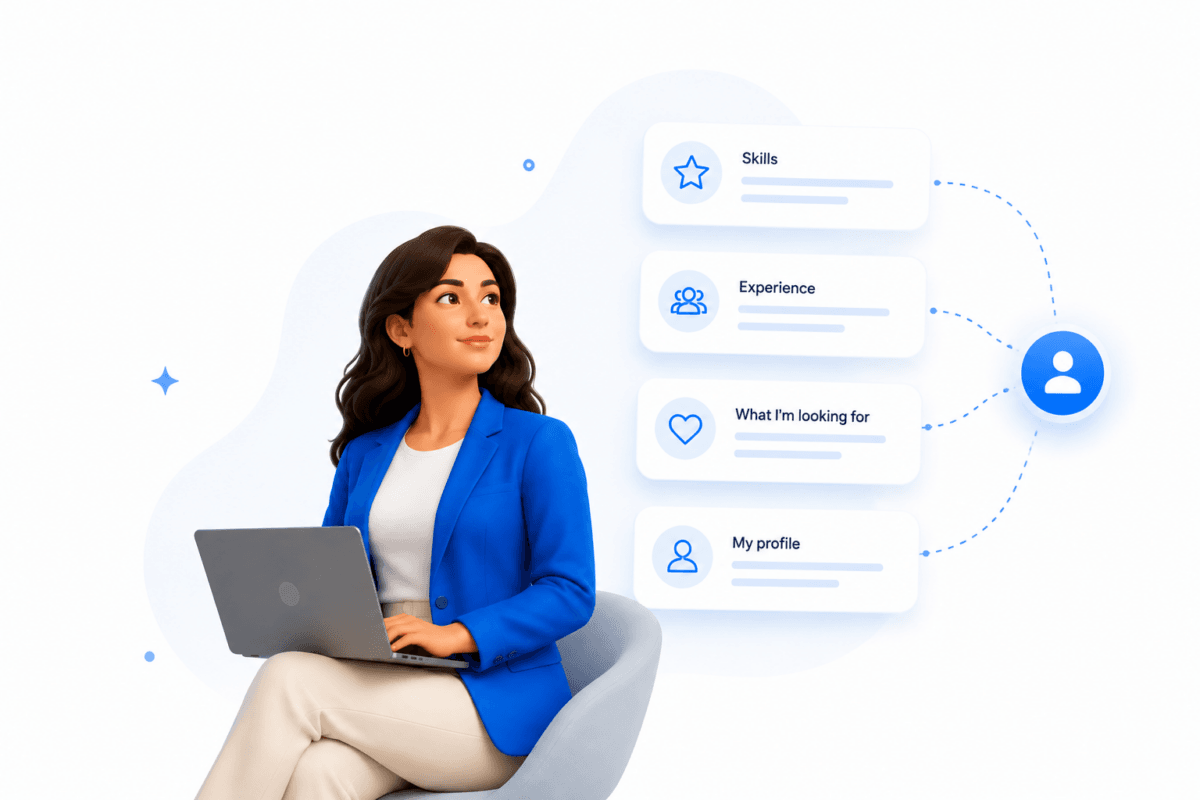
Register on platforms built for passive discovery. A passive job search doesn’t mean doing nothing. It means putting your profile somewhere the right people can find it without you having to apply to every open role. Talentprise lets engineers build a verified skills profile that engineering recruiters and employers can search directly. When a recruiter runs a search that matches your background, your profile appears in their results. You don’t apply to anything. You stay in your current job while relevant opportunities come to you. For a broader look at how to structure your search, this 2026 job search guide covers the full picture.
Connect with specialist recruiters directly. A recruiter who places civil engineers on infrastructure projects has far more relevant contacts than a generalist recruiter. A brief, professional introduction, even when you’re not actively looking, puts you in their database for when a relevant role comes up. You don’t need to pretend you’re urgently available. Just make yourself known.
Keep your resume updated and ready to share. Recruiters move fast when a role comes in. An outdated resume that needs two weeks of work loses you the opportunity. Keep a current version ready, focused on project outcomes and specific technical details rather than generic role descriptions. Knowing what to put on a resume before that call comes in matters more than most engineers expect.
How AI platforms are changing engineering recruitment
Traditional engineering staffing relies on recruiters’ personal networks and Boolean keyword searches in resume databases. Both have real limitations. Keyword searches miss candidates who describe their skills differently. Personal networks have geographic and industry boundaries that exclude plenty of qualified people.
The supply side of the market makes this more acute. A Q1 2026 analysis from Bartech Staffing found approximately three open engineering roles for every qualified candidate, with mid and senior hiring cycles running 40 to 50 days. Recruiters who rely on keyword-only searches are leaving viable candidates undiscovered while roles go unfilled.
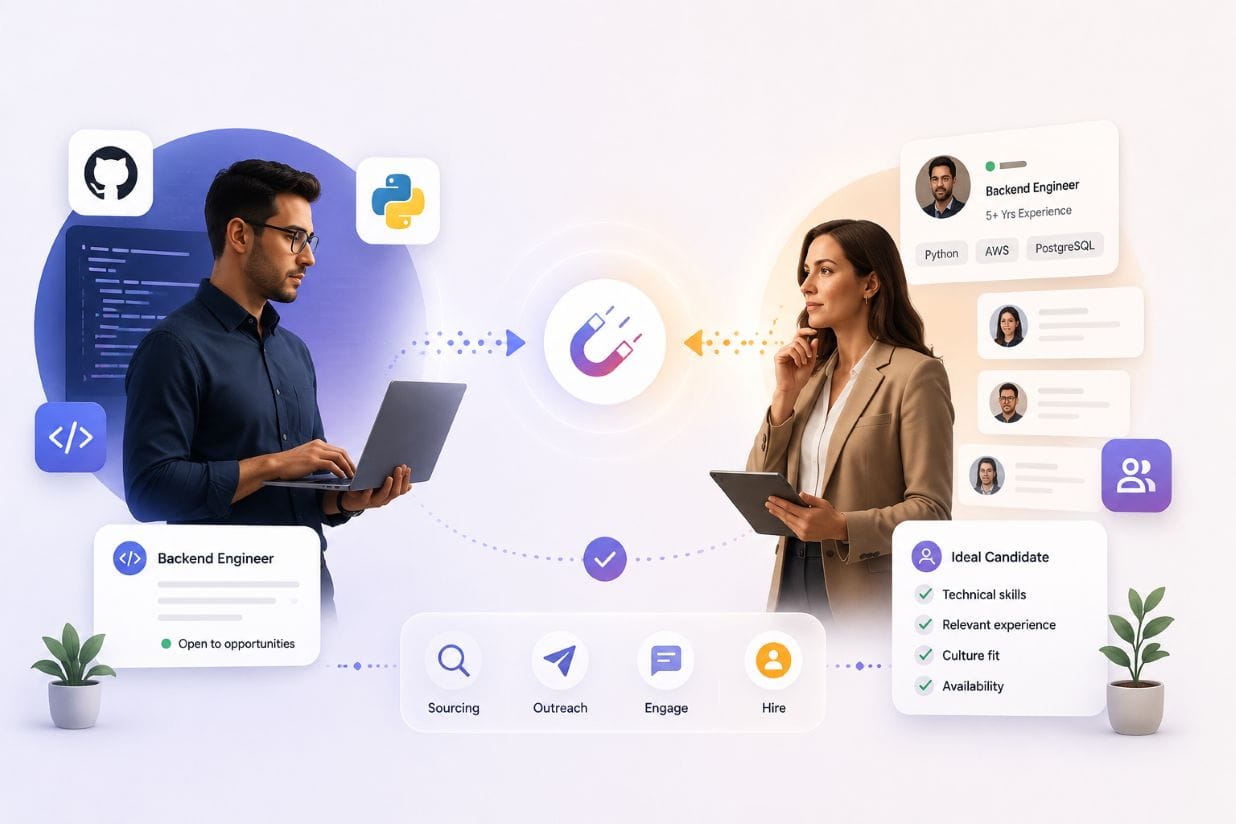
AI-powered sourcing platforms work differently. A recruiter can describe the candidate they need in plain language, something like “a controls engineer with PLC programming experience in food and beverage manufacturing, open to relocation, mid-senior level,” and the platform returns a ranked shortlist based on actual fit rather than keyword overlap. How AI is reshaping the recruitment process for job seekers is worth understanding before you decide where to put your profile.
For engineers, this changes who can find you. Talentprise uses context-based AI matching to surface candidates to verified recruiters based on skills, experience, and potential. Engineers with a complete Talentprise profile are discoverable to over 10,000 recruiters and employers on the platform, including firms that aren’t running LinkedIn searches or working with a traditional staffing agency. Platforms built specifically for AI job discovery are becoming another place where recruiters can directly source engineers whose profiles match complex hiring needs.
A complete, specific profile is what puts you on a recruiter’s shortlist for roles that never reach a job board. Create your free Talentprise profile and let engineering recruiters find you based on what you can actually do.
Frequently asked questions

Editorial Team
Our team is fueled by a passion for crafting valuable content that enriches the experiences of our users, customers, and visitors. We meticulously select meaningful and unbiased topics ranging from tips and guides to challenges and the latest in technology, trends, and job market insights. All curated with care and affection!